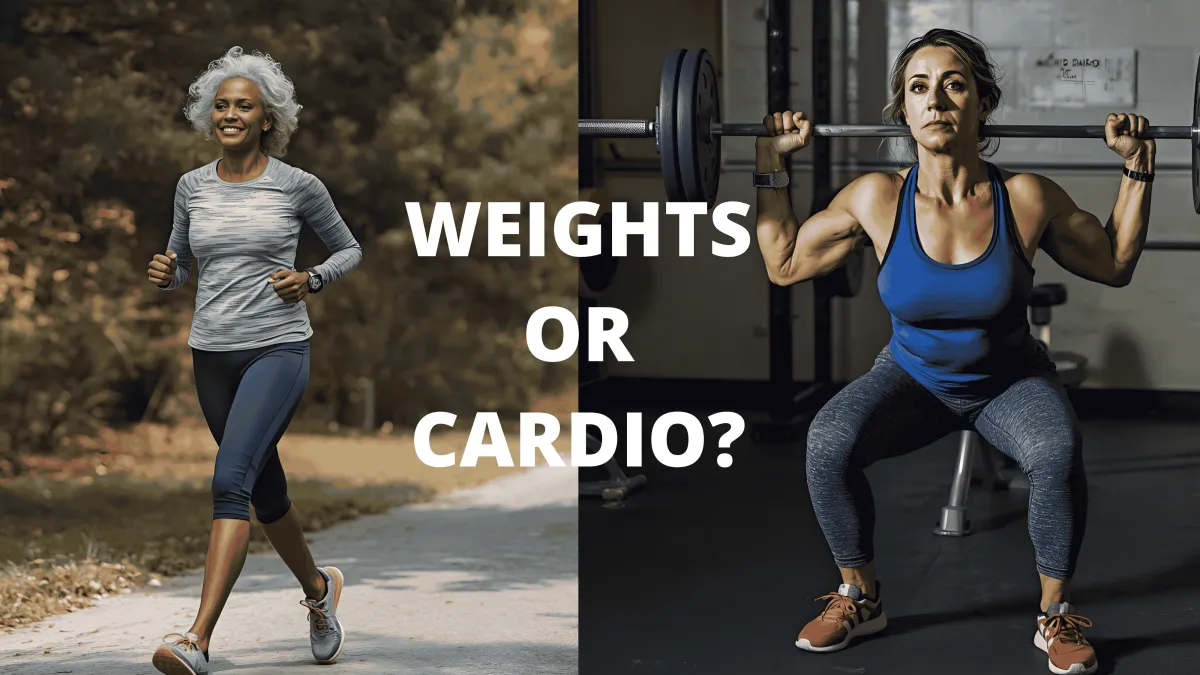
Weights or Cardio: What’s Better for Busy People Over 40?
As a personal trainer and nutrition coach for people over 40, one of the most common questions I hear is this: “Should I focus on weights or cardio?”
It’s a great question because both have major benefits. The key is knowing how to use each one effectively so you can get stronger, feel more energetic, and age well without spending endless hours at the gym. Let’s break down what each does, why you need both, and how to structure your workouts for the best results.
The Common Mistake Most People Make
When most people start back up with exercise, they pick one side of the fence. Either cardio or weights.
Some lace up their shoes and go straight for a run after months or years off. They push too hard, get sore, hate it, and then don’t touch it again for another six months. Others head into the gym, grab the lightest dumbbells they can find, and “do strength training” without ever challenging their muscles enough to make real progress.
On the flip side, some try to relive their high school glory days by benching or squatting the same weight they did twenty years ago and end up hurting themselves.
You don’t need to kill yourself with cardio or lift like a powerlifter. You just need the right blend of both for your goals, energy, and lifestyle.
What Cardio Actually Does for You
Cardio isn’t just about burning calories. It’s about improving your heart, lungs, and endurance so you can recover faster, stay active longer, and age better. But there are different types of cardio, and not all are created equal. Here’s how to use them effectively.
1. Zone 2 Cardio – The Longevity Zone
This is the conversational pace cardio where you can talk but not sing. It’s incredible for heart health and stress reduction. Think brisk walking, light cycling, or hiking. For most people, 30 to 60 minutes a week in Zone 2 is a game changer for energy and recovery.
2. Core and Cardio Finishers
At the end of your strength workouts, add five to ten minutes of what I call “CCs” — core and cardio. Examples include 30 seconds of planks followed by 30 seconds of jump squats, then 30 seconds of rest. Repeat for five to ten minutes. These short finishers build stamina, strengthen your midsection, and give your workouts that satisfying finish.
3. High Intensity Options (Optional)
For those who love a challenge, you can mix in short bursts of high intensity cardio like sled pushes, kettlebell swings, or bike sprints. Just remember, these should supplement your base of steady-state cardio, not replace it. Consistency matters more than intensity.
Why Weights Matter More Than You Think
While cardio helps your heart, strength training is what keeps your body young. Muscle isn’t just about appearance. It’s your body’s most important longevity organ. It helps regulate blood sugar, protects your bones, improves metabolism, and gives you the strength to do everyday things pain free.
You don’t need to lift like a bodybuilder to benefit. Building muscle after 40 comes down to two main principles.
Mechanical Tension
Your muscles need to experience enough resistance to adapt and grow. You have to make the exercise hard enough that your body says, “We need to get stronger.” That doesn’t mean pushing to failure every set, but you should come within one or two reps of your limit with good form.
Progressive Overload
This is the golden rule of strength training... doing just a little more over time. That can mean adding a few pounds to the bar, doing one or two more reps, or choosing a slightly harder variation. The key is consistency. Small, steady increases lead to massive results over time.
How to Lift Without Getting Bulky
Let’s clear this up once and for all. Lifting weights will not make you bulky. Bulky comes from excess calories, not dumbbells.
Building lean, toned muscle makes you look tighter, stand taller, and burn more calories even at rest. If you lift with moderate weight and focus on form, you’ll look stronger, not bigger. Think firm arms, shapely legs, and a confident posture that shows you take care of yourself.
How Much of Each You Actually Need
Here’s a simple, sustainable approach that works for my clients.
Strength Training: 2 to 4 days per week
Focus on big movements like squats, presses, rows, and hinges. Aim to get stronger in these over time.
Cardio: 1 to 2 days per week
Do one dedicated cardio session like a 30 to 60 minute walk, hike, or bike ride. Add short finishers at the end of strength sessions for an extra boost.
Movement Every Day
Even on rest days, stay active. Walk the dog, stretch, or play with your kids. Every bit of movement counts.
How to Combine Weights and Cardio Without Burning Out
One of the biggest mistakes people make is trying to do it all too soon. You don’t need seven workouts a week to see results. You just need a plan that fits your life.
Here’s an example of a weekly layout.
Monday: Full body strength
Tuesday: Zone 2 cardio (brisk walk or cycle)
Wednesday: Full body Strength
Thursday: Rest or light movement
Friday: Rest or light movement
Saturday: Fun activity (hike, sports, dance)
Sunday: Rest or light movement
This approach gives your body time to recover while still hitting every system—strength, endurance, and mobility.
Nutrition: The Missing Piece of the Puzzle
You can train perfectly and still stall if your nutrition doesn’t match your goals.
For building lean muscle and energy after 40, focus on these basics.
Eat Enough Calories
Your body needs energy to recover and build muscle. Under-fueling is just as bad (if not worse) than eating too much.
Prioritize Protein
Aim for about 0.7 grams of protein per pound of body weight, or 1 gram per pound of lean body mass if you want to be more precise. Good sources include chicken, fish, eggs, Greek yogurt, lean beef, and protein shakes if needed.
Don’t Fear Carbs
Carbs fuel your workouts and help replenish glycogen. Think rice, potatoes, oats, fruits, and vegetables.
Stay Hydrated and Manage Stress
Both affect energy, recovery, and overall results. Simple daily habits like walking, sleeping well, and staying hydrated are natural energy boosters that make a big difference.
Why Muscle Protects You as You Age
Muscle isn’t just about looks. It’s a long-term investment in your health. It keeps your metabolism high, reduces the risk of falls, supports your joints, and helps prevent age-related diseases like diabetes and osteoporosis. Think of muscle as your body’s insurance policy. The more you have, the more resilient you are.
Cardio for Recovery and Longevity
While strength training builds your body structure, cardio keeps the system running smoothly. Zone 2 work helps lower your resting heart rate, improves recovery between strength sessions, and boosts overall endurance so you can do more of what you love. Whether that’s hiking with your family, chasing your kids, or simply feeling more alive day to day, it all starts with better cardiovascular conditioning.
Putting It All Together
You don’t have to choose between weights or cardio. You need both. Weights keep you strong, toned, and metabolically healthy. Cardio keeps your heart young and your energy high. When you blend them strategically without overdoing either, you create a foundation for lifelong fitness. You’ll move better, feel younger, and have the energy to live life fully.
Final Thoughts
At the end of the day, it’s not about doing everything perfectly. It’s about doing the right things consistently. You don’t need fancy equipment or extreme routines. You just need a plan that fits your busy life and helps you feel strong, capable, and confident. Start with small wins. Don’t miss twice. And remember, you never fail if you never quit.


